
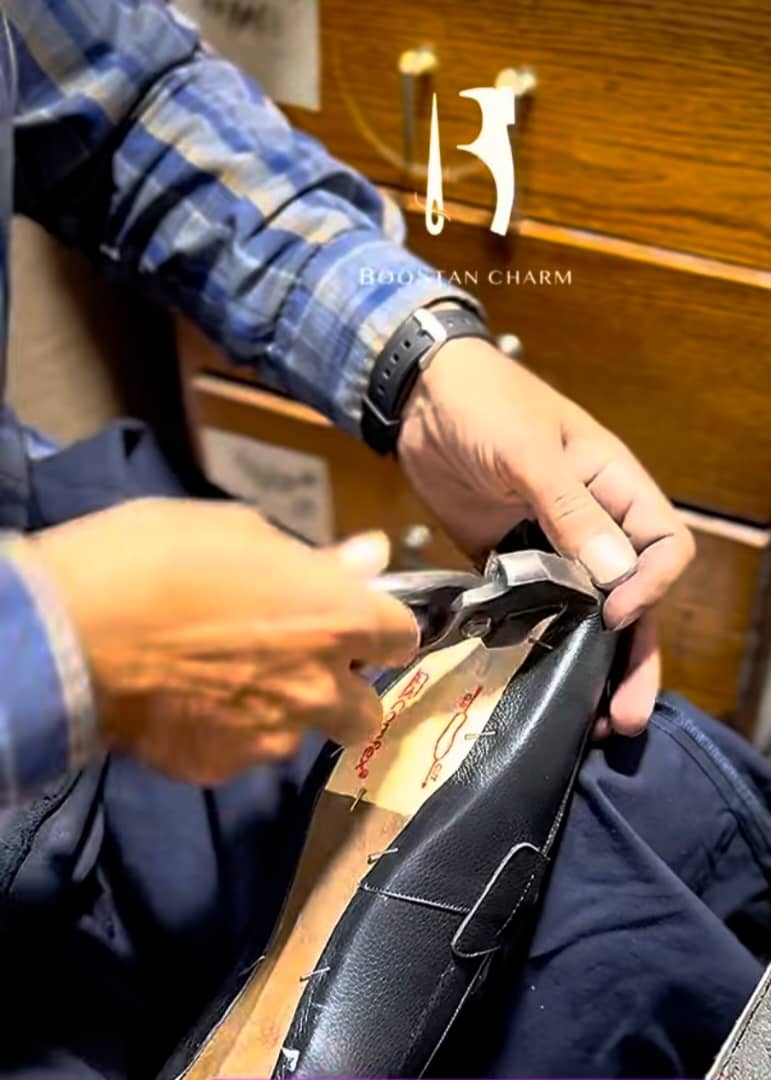
How to Tell if a Leather Shoe Is Truly Handmade or Semi-Handmade
These days, many shoes labeled as handmade are, in fact, only partially crafted by hand.
Here are several reliable ways to distinguish a genuinely handmade shoe from a semi-handmade one:
🧵 1. Stitching on the Sole and Upper
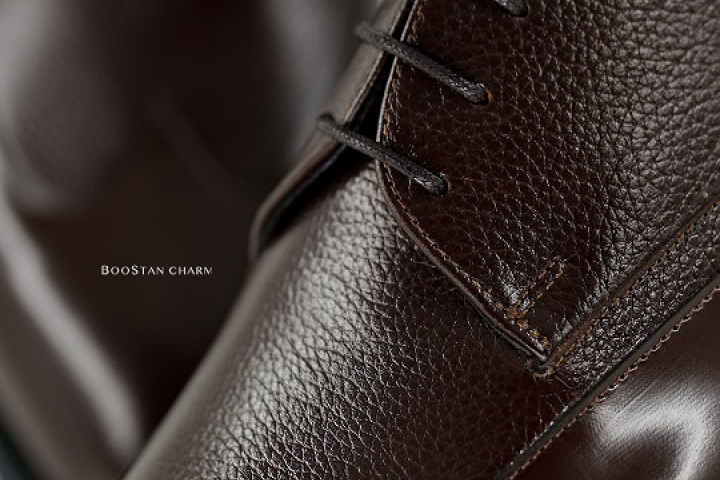
- In handmade shoes, the stitches are usually slightly uneven or irregular but natural, as they are sewn by hand.
- The thread tends to be thicker, and you may notice small knots or loose ends in the corners.
- In semi-handmade shoes, the stitching is too perfect, straight, and uniform, because it’s done by industrial machines.
👃 2. Smell of Leather and Glue
- Handmade shoes are typically made from natural leather, which has the distinct scent of real animal hide.
- Semi-handmade shoes often have a stronger smell of industrial glue or synthetic materials.
👀 3. Construction Details and Edges
- In handmade work, the edges are hand-polished and finished carefully, without signs of machine molding.
- Slight variations in thickness or angle along the edges are normal—and a sign of true craftsmanship.
- Semi-handmade shoes, on the other hand, usually have perfectly uniform and molded edges.
🪡 4. Sole and Its Attachment to the Upper
- In a handmade shoe, the sole is stitched with thread (not just glued).
- If you touch the stitching, you can feel the thread passing through both sides.
- In semi-handmade models, the stitching is decorative only, and the sole is held in place with glue.
🖐 5. Feel and Flexibility
- Handmade shoes are usually softer and more flexible, thanks to natural leather and a hand-shaped form.
- Semi-handmade shoes are stiffer and less adaptive, as they are molded by machines.
🪶 6. Time and Price
- Making a truly handmade pair of shoes takes time and effort, which naturally makes it more expensive—not because of branding, but because of the craftsmanship involved.
- If a pair marketed as handmade has an unusually low price, it’s most likely semi-handmade or semi-industrial.
Leave a comment